

Back-to-school season is always an exciting time filled with preparations. Among books, backpacks, and uniforms, one essential item often gets overlooked until it causes a problem: school shoes. Choosing the right pair goes far beyond style; it is about investing in your child’s comfort, health, and daily well-being.
Children’s feet are constantly growing, and they spend hours each day on the move. Poorly chosen shoes can not only cause immediate discomfort but may also harm posture, limit mobility, and compromise healthy development. This complete guide was designed to help parents make informed decisions, combining science, practical advice, and the expertise of College by Pikitri, a brand specializing in premium school footwear.
1. The Importance of School Shoes in Child Development
Children’s feet grow quickly: on average, two sizes per year until age 6, and at least one size per year until age 12. This rapid growth means that proper footwear is critical. Shoes that are too tight can deform the foot, while shoes that are too loose can affect balance.
Moreover, school shoes are worn intensively. During the school year, a child may spend over 1,000 hours wearing the same pair of shoes, which requires durability and high-quality materials. Choosing the right footwear is an investment in both health and confidence.
2. Key Criteria When Choosing
a) Comfort: Shoes should provide freedom of movement. Interiors must be cushioned, with breathable insoles and flexible soles that support natural walking.
b) Durability: Daily school activities, running in the playground, climbing stairs, playing football, demand robust footwear. Leather or other premium materials guarantee superior strength.
c) Proper Fit: Always ensure about 1 cm of space between the longest toe and the tip of the shoe to allow growth without discomfort.
d) Style and Uniform Compatibility: School shoes must be versatile, elegant, and uniform-friendly. Classic black or navy styles are often the best choice.
3. How to Correctly Measure a Child’s Foot
- Place a sheet of paper on the floor against a wall.
- Have the child stand on it with their heel touching the wall.
- Mark the tip of the longest toe with a pencil.
- Measure the distance from the wall to the mark.
- Add 0.5 to 1 cm for comfort and growth.
- At College by Pikitri, we provide detailed size charts and an easy exchange policy to make parents feel secure when buying online.
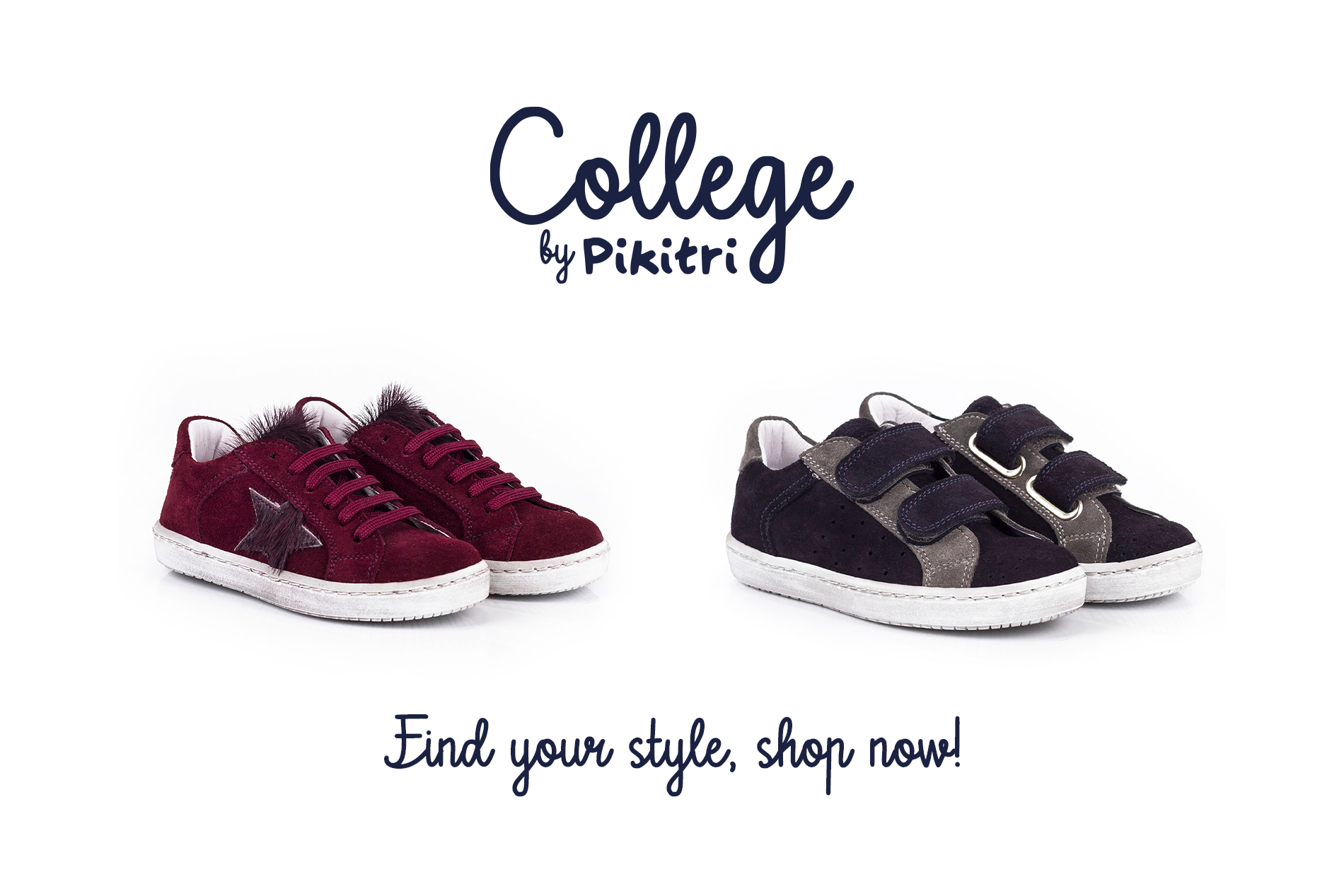
4. Practical Examples: Shoes for Different Needs
- For very active children: shoes with non-slip soles and reinforced heels.
- For rainy climates: leather or treated water-resistant materials.
- For classic uniforms: timeless black school shoes.
- For wider feet: adjustable closures and spacious toe boxes.
5. Common Mistakes to Avoid
- Buying one size bigger “to last longer” (causes instability and falls).
- Choosing overly rigid shoes that restrict natural movement.
- Prioritizing price over quality and durability.
- Ignoring discomfort signs such as redness or frequent complaints.
6. Frequently Asked Questions (FAQ)
- How many pairs of school shoes should my child have? Ideally, two pairs: one primary pair and one backup to alternate use and extend durability.
- How often should I check shoe size? Every three months, since growth is fast and what fits now may not fit soon.
- Are leather shoes better than synthetic ones? Natural leather offers better durability and breathability. However, high-quality synthetics can also be comfortable and eco-friendly.
Choosing the perfect school shoes is an investment in your child’s future. More than style, it is about health, comfort, and well-being. By choosing College by Pikitri, parents can rely on footwear that combines comfort, durability, and timeless style, designed to support every step of the school journey.


